Our Spotlights
Read expert perspectives on current news and events and connect with leading University of Florida experts to learn more.

Study finds most cancer patients exposed to misinformation; UF researchers pilot 'information prescription'
Ninety-three percent of patients with a new cancer diagnosis were exposed to at least one type of misinformation about cancer treatments, a UF Health Cancer Center study has found. Most patients encountered the misinformation — defined as unproven or disproven cancer treatments and myths or misconceptions — even when they weren’t looking for it. The findings have major implications for cancer treatment decision-making. Specifically, doctors should assume the patient has seen or heard misinformation. “Clinicians should assume when their patients are coming to them for a treatment discussion that they have been exposed to different types of information about cancer treatment, whether or not they went online and looked it up themselves,” said senior author Carma Bylund, Ph.D., a professor and associate chair of education in the UF Department of Health Outcomes and Biomedical Informatics. “One way or another, people are being exposed to a lot of misinformation.” Working with oncologists, Bylund and study first author Naomi Parker, Ph.D., an assistant scientist in the UF Department of Health Outcomes and Biomedical Informatics, are piloting an “information prescription” to steer patients to sources of evidence-based information like the American Cancer Society. The study paves the way for other similar strategies. Most notably, the study found the most common way patients were exposed to misinformation was second hand. “Your algorithms pick up on your diagnosis, your friends and family pick up on it, and then you’re on Facebook and you become exposed to this media,” Parker said. “You’re not necessarily seeking out if vitamin C may be a cure for cancer, but you start being fed that content.” And no, vitamin C does not cure cancer. Health misinformation can prevent people from getting treatment that has evidence behind it, negatively affect relationships between patients and physicians, and increase the risk of death, research has shown. People with cancer are particularly vulnerable to misinformation because of the anxiety and fear that comes with a serious diagnosis, not to mention the overwhelming amount of new information they have to suddenly absorb. While past research has studied misinformation by going directly to the source — for instance, studying what percentage of content on a platform like TikTok is nonsense — little research has looked at its prevalence or how it affects people. The team first developed a way to identify the percentage of cancer patients exposed to misinformation. UF researchers collaborated with Skyler Johnson, M.D., at Huntsman Cancer Institute, an internationally known researcher in the field. The survey questions were based on five categories of unproven or disproven cancer treatments — vitamins and minerals, herbs and supplements, special diets, mind-body interventions and miscellaneous treatments — and treatment misconceptions. The myths and misconceptions were adapted from National Cancer Institute materials and included statements like “Will eating sugar make my cancer worse?” The team surveyed 110 UF Health patients diagnosed with prostate, breast, colorectal or lung cancer within the past six months, a time when patients typically make initial treatment decisions. Most had heard of a potential cancer treatment beyond the standard of care, and most reported they had heard of at least one myth or misconception. The most common sources were close friends or family and websites, distant friends/associates or relatives, social media and news media. The findings mark a shift in misinformation research, with major implications for the doctor-patient relationship, said Bylund, a member of the Cancer Control and Population Sciences research program at the UF Health Cancer Center. “I still think media and the internet are the source and why misinformation can spread so rapidly, but it might come to a cancer patient interpersonally, from family or friends,” she said. Most patients rarely discussed the potential cancer treatments they had heard about with an oncologist, the study also found. Next, the researchers plan to survey a wider pool of patients, then study the outcomes of interventions designed to decrease misinformation exposure, like the information prescription.

April 12, 2026
3 min
New AI tool matches students with high-impact internships
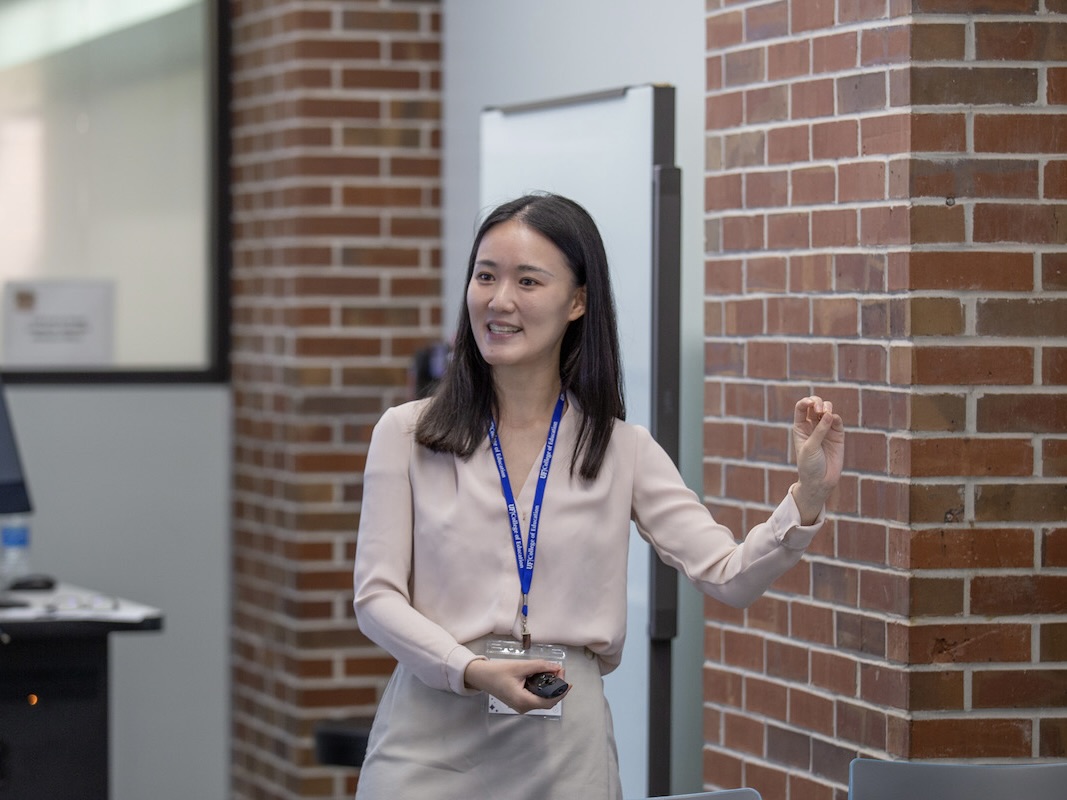
Finding the right internship can be an important step for students, but it’s not always clear which opportunities will lead to the strongest growth. To help solve that problem, University of Florida researchers have developed an AI-powered tool that helps students identify internships most likely to accelerate their technical and professional development. Unlike traditional recommendation engines, Pro-CaRE not only predicts which opportunities will lead to stronger outcomes, it also explains why each suggestion is a good fit. In testing data collected from the students, Pro-CaRE’s predictions proved highly accurate, accounting for more than 72% of the differences in learning gains among participants. While the pilot is being tested in engineering, the tool could be adopted for other disciplines. “Internships are one of the most critical parts of an engineering education, but students often struggle to know which experiences will actually help them grow,” said Jinnie Shin, assistant professor of research and evaluation methodology in the UF College of Education. “What makes Pro-CaRE unique is that it doesn’t just offer a list of options. It provides personalized recommendations backed by data and it tells students clearly why an opportunity is a good match for them.” Pro-CaRE creates matches by analyzing each student’s coursework, major, background and self-reported interest, confidence and self-efficacy in engineering skills. It then compares that profile with a carefully chosen set of similar peers to refine suggestions. The result is more precise guidance that adapts to students at different stages of their degree programs. “Students shouldn’t have to guess or hope that an internship will be worthwhile,” Shin said. “With Pro-CaRE, they can approach opportunities knowing they’re backed by evidence, whether the role is onsite, hybrid or remote and whether it’s at a startup or a Fortune 500 company.” The system is designed to work across a wide range of companies and contexts, giving students flexibility while ensuring their choices align with their personal and professional goals. Each recommendation comes with a clear “why this?” explanation, so students can make confident decisions and discuss options more effectively with advisors. Pro-CaRE was developed by a cross-disciplinary UF team combining expertise in education and engineering. Alongside Shin, the project’s co-principal investigators include Kent Crippen in the College of Education and Bruce Carroll in the Herbert Wertheim College of Engineering. The team is exploring external funding opportunities to expand the usage and test the efficacy on a larger scale. “Ultimately, our goal is to empower students to invest their time in experiences that will have the greatest impact,” Shin said. “Pro-CaRE bridges the gap between what students hope to gain and what internships can truly deliver.”

April 09, 2026
2 min

Using AI tools empowers and burdens users in online Q&A communities
Whether you’ve searched for cooking tips on Reddit, troubleshooted tech problems on community forums or asked questions on platforms like Quora, you’ve benefited from online help communities. These digital spaces rely on people across the world to contribute their knowledge for free, and have become an essential tool for solving problems and learning new skills. New research reveals that generative artificial intelligence tools like ChatGPT are creating a double-edge effect on users in these communities, simultaneously making them more helpful while potentially overwhelming them to the point of decreasing their responses. “On the positive side, AI helps users learn to write more organized and readable answers, leading to a noticeable increase in the number of responses,” explained Liangfei Qiu, Ph.D., study coauthor and PricewaterhouseCoopers Professor at the University of Florida Warrington College of Business. “However, when users rely too heavily on AI, the mental effort required to process and refine AI outputs can actually reduce participation. In other words, AI both empowers and burdens contributors: it enables more engagement and better readability, but too much reliance can slow people down.” The study examined Stack Overflow, one of the world’s largest question-and-answer coding platforms for computer programmers, to investigate the impact of generative AI on both the quality and quantity of user contributions. Qiu and his coauthor Guohou Shan of Northeastern University’s D’Amore-McKim School of Business measured the impact of AI on users’ number of answers generated per day, answer length and readability. Specifically, they found that users who used AI tools to generate their responses contributed almost 17% more answers per day compared to those who didn’t use AI. The answers generated with AI were both shorter by about 23% and easier to read. However, when people relied too heavily on AI tools, their participation decreased. Qiu and Shan noted that the additional cognitive burden associated with heavier AI usage negatively affected the impact on a user’s answer quality. For online help communities grappling with AI policies, this research provides valuable insight into how these policies can be updated in the current AI environment. While some communities, like Stack Overflow, have banned AI tools, this research suggests that a more nuanced approach could be a better solution. Instead of banning AI entirely, the researchers suggest striking a balance between allowing AI usage while promoting responsible and moderated use. This approach, they argue, would enable users to benefit from efficiency and learning opportunities, while not compromising quality content and user cognition. “For platform leaders, the takeaway is clear: AI can boost participation if thoughtfully integrated, but its cognitive demands must be managed to sustain long-term user contributions,” Qiu said.

April 07, 2026
2 min

CEOs 5 times more likely to survive fraud than a personal scandal
If the CEO of Astronomer had overseen tax fraud instead of being caught on a kiss cam cuddling his HR chief in an extramarital affair, he might still have a job. That’s because, according to a new study, CEOs are five times more likely to be fired for personal misconduct than for overseeing financial fraud. “For financial fraud, the CEO can easily say, ‘Hey, it wasn’t me,’” said Aaron Hill, Ph.D., an associate professor in the University of Florida Warrington College of Business who led the study. “With personal misconduct, there’s no excuse.” The research, forthcoming in Strategic Organization, examined 59 cases of personal misconduct and compared them with more than 300 financial scandals at publicly traded companies between 1997 and 2020. The personal cases included inappropriate relationships, drug or alcohol incidents, domestic violence, falsifying credentials and derogatory speech. Hill and his colleagues found that boards move decisively when a CEO’s private behavior becomes public. By contrast, financial misconduct — such as accounting restatements that can wipe out billions in shareholder value — often leaves room for a chief executive to deflect blame onto others in the organization. Recent company performance influenced how boards responded, to a point. A CEO whose company was thriving could often survive a financial scandal because directors had both plausible deniability and a strong incentive not to disrupt success. But good numbers offered little protection when the problem was personal behavior. For example, McDonald’s ousted Steve Easterbrook in 2019 over a consensual relationship with a subordinate, even though the company’s stock price had doubled under his leadership. Hewlett-Packard similarly dismissed CEO Mark Hurd after harassment allegations despite his reputation for turning the firm around. “Even strong performance can’t erase certain kinds of misconduct,” Hill said. “There are some things you just can’t excuse.” The study also uncovered how scandals influenced succession decisions. When personal misconduct led to a firing, boards were more likely to promote an insider, signaling that the problem lay with one person rather than the culture of the company. Financial scandals, on the other hand, often prompted boards to recruit outsiders as a way of reassuring markets that the firm was serious about change. “It’s a signaling move,” Hill said. “Bring in an outsider after fraud, and the market reacts positively. Stick with an insider after a personal scandal, and it says the organization itself is sound.” The researchers argue that these choices reveal how boards balance their fiduciary duty with the reputational risks of scandal. While dismissing a CEO can serve as a public relations reset, Hill emphasized that it is almost always a financially motivated calculation. “Boards are supposed to look out for the company and its shareholders,” he said. “But when they decide to keep a CEO after misconduct, I think it sends the wrong message — to employees, to investors and to the public.”

April 04, 2026
2 min

UF develops breakthrough magnet that could transform metal production
Imagine if producing steel parts for agricultural equipment or even aluminum soda cans required only a fraction of the energy it does today. A University of Florida-led innovation may soon make this a reality. In a groundbreaking collaboration backed by a nearly $11 million federal grant, UF researchers have developed a first-of-its kind superconducting magnet that could advance metal production and position the United States as a global leader in alloy production. “This revolutionary technology has the potential to substantially reduce the cost and energy use of heat treatments in the steel industry, and we are excited to help pave the way for its adoption in industry.” —Michael Tonks, Ph.D., UF’s interim chair of Materials Science and Engineering Funded by the U.S. Department of Energy’s Advanced Manufacturing Office, the project uses Induction-Coupled Thermomagnetic Processing, or ITMP, an advanced manufacturing method that integrates magnetic fields with high-temperature thermal processing. The national consortium of industry, academic and national laboratory partners is now led by Michael Tonks, Ph.D., UF’s interim chair of Materials Science and Engineering, who succeeded Michele Manuel, Ph.D., the project’s long-time leader. “This revolutionary technology has the potential to substantially reduce the cost and energy use of heat treatments in the steel industry, and we are excited to help pave the way for its adoption in industry,” said Tonks. It’s not just any piece of equipment; it’s a custom-built superconducting magnet with a unique ability to combine magnetic fields with high-temperature thermal processing. In partnership with the UF physics department, Oak Ridge National Laboratory, or ORNL, and six companies interested in the technology, the magnet and cylinder induction furnace now sit atop a 6-foot-high platform. The prototype, which costs more than $6 million to purchase and install, is capable of processing steel samples up to 5 inches in diameter making it a rare asset for academic research. Yang Yang, Ph.D., UF materials science research faculty member, estimated ITMP could reduce steel processing time by as much as 80 percent, cutting energy use and operational costs. “Thermomagnetic processing changes a material’s phase stability and kinetic properties, accelerating carbon diffusion in steel, said Yang. “Traditional furnaces cannot achieve these advanced material properties.” The system works by modifying the driving forces for important steel phase changes, which shortens heat treatment. “What normally takes eight hours can be done in just a few minutes.” Yang explained. “The magnetic field acts as an external driving force to make atoms diffuse faster.” Unlike conventional energy sources like electricity or natural gas, the ITMP process uses volumetric induction heating along with high-static magnetic fields to lower energy consumption. The project is still in a pilot phase and requires additional research and testing. At ORNL, researchers emphasized the rarity of UF’s prototype, citing its unprecedented combination of magnetic field strength and ability to process large samples and components. “This could significantly advance U.S. manufacturing and process efficiency for heat treatment of materials such as metal alloys of steel or aluminum,” said Michael Kesler, Ph.D., ORNL research scientist and lead collaborator. Kesler noted successful implementation of this technology could contribute to a reliable energy grid and more efficient industrial electrification. UF researchers contend it could also reduce carbon emissions, supporting cleaner, more sustainable manufacturing processes. The tall, two-level magnet now resides in the Powell Family Structures and Materials Laboratory on UF's East Campus. MSE plans to officially unveil it in December, inviting representatives from national labs, industry and academia. While Engineering students will have future opportunities to use it for research and experiential learning, UF researchers are optimistic about potential industry adoption for industrial manufacturing in the next five to 10 years. The award is part of a $187 million DOE initiative to strengthen competitiveness in U.S. manufacturing. If successful, the innovation could redefine how the world shapes the materials of tomorrow.

April 01, 2026
3 min

UF researchers aim to improve nutrition for cancer patients
A new study and first-of-its-kind food pharmacy at UF aim to help patients with cancer access and eat nutritious foods, giving them the best possible shot at a healthy future. As many as a third of cancer patients face food challenges, particularly in rural areas. Good nutrition can improve outcomes during and after treatment. With a grant from the Florida Department of Health, a team of researchers at the University of Florida Health Cancer Center and Sylvester Comprehensive Cancer Center will first assess the community’s nutritional needs. Then they’ll test the usefulness of a food-focused digital tool designed to connect patients to helpful resources. An on-site food pharmacy will help patients not only get the food they need to thrive but also provide tools for lasting change. “We’re taking a community-based approach to holistic cancer care,” said Dejana Braithwaite, Ph.D., associate director for population sciences at the UF Health Cancer Center. “Patients consistently express that nutrition is an important issue for them during cancer treatment. We want to address nutritional needs from treatment through survivorship with a sustainable intervention. ASCENT brings science and community together to make that a reality in Florida.” Braithwaite, a professor and division chief in the UF Department of Surgery, is leading the multi-institution study with Tracy Crane, Ph.D., R.D.N., director of lifestyle medicine, prevention and digital health and co-lead of the Cancer Control Program at Sylvester, part of the University of Miami Health System. Researchers from the UF colleges of Journalism, Medicine, and Public Health and Health Professions and UF/IFAS Extension are participating. The Florida Partnership for Adding Social Context to Address Cancer Survivorship Outcomes study, which the researchers have nicknamed ASCENT, will focus on those affected by the most prevalent cancers in Florida, including breast, lung, colorectal, prostate and blood cancers. “Cancer survivors who follow a healthy dietary pattern have a lower risk of recurrence and death,” said Cora Best, Ph.D., R.D.N., an assistant professor of nutritional sciences in the UF College of Agricultural and Life Sciences and study team member. “Some cancer therapies have long-term or late side effects that increase the risk for chronic conditions, like osteoporosis, which can be alleviated with good nutrition. That means a healthy diet during and after oncologic treatment can enhance lifespan and quality of life.” Researchers will start by conducting interviews with patients, providers and community-based organizations. They want to understand how to best use resources to meet the nutritional needs of those with cancer, such as food security and diet quality. “Community outreach and engagement with various groups is a cornerstone of the study,” said Francis Dalisay, Ph.D., an associate professor in the UF College of Journalism and Communications who helped develop the interview guides. The team will use the information to build a diet intervention with online surveys and patient navigator support, which they will test in a randomized clinical study at UF Health and Sylvester. Patient navigators will connect patients with resources like community programs or specialist referrals. The food pharmacy, located at the UF Clinical and Translational Sciences Metabolic Kitchen, will help cancer patients get healthy, whole nutrient-dense foods like high-protein items, fruits, vegetables and pantry staples. It will also provide workshops, personalized recipes and meal plans. Although the United States is a wealthy nation, food insecurity remains common, including in Florida, Best said. “The ASCENT study pairs evidence-based dietary guidance for cancer survivors with innovative strategies to overcome barriers like food insecurity,” she said. Ultimately, the study aims to empower patients so they can address lifestyle factors in their control, boosting their well-being. “I am hopeful this study will provide patients with appropriate resources to improve their overall nutrition, especially those who are malnourished,” said Paul Crispen, M.D., the Cancer Center’s associate director for clinical research and a study adviser.

March 30, 2026
3 min

New light-based chip boosts power efficiency of AI tasks 100 fold
A team of engineers has developed a new kind of computer chip that uses light instead of electricity to perform one of the most power-intensive parts of artificial intelligence — image recognition and similar pattern-finding tasks. Using light dramatically cuts the power needed to perform these tasks, with efficiency 10 or even 100 times that of current chips performing the same calculations. Using this approach could help rein in the enormous demand for electricity that is straining power grids and enable higher performance AI models and systems. This machine learning task, called “convolution,” is at the heart of how AI systems process pictures, videos and even language. Convolution operations currently require large amounts of computing resources and time. These new chips, though, use lasers and microscopic lenses fabricated onto circuit boards to perform convolutions with far less power and at faster speeds. In tests, the new chip successfully classified handwritten digits with about 98% accuracy, on par with traditional chips “Performing a key machine learning computation at near zero energy is a leap forward for future AI systems,” said study leader Volker J. Sorger, Ph.D., the Rhines Endowed Professor in Semiconductor Photonics at the University of Florida. “This is critical to keep scaling up AI capabilities in years to come.” “This is the first time anyone has put this type of optical computation on a chip and applied it to an AI neural network,” said Hangbo Yang, Ph.D., a research associate professor in Sorger’s group at UF and co-author of the study. Sorger’s team collaborated with researchers at UF’s Florida Semiconductor Institute, the University of California, Los Angeles and George Washington University on study. The team published their findings, which were supported by the Office of Naval Research, Sept. 8 in the journal Advanced Photonics The prototype chip uses two sets of miniature Fresnel lenses using standard manufacturing processes. These two-dimensional versions of the same lenses found in lighthouses are just a fraction of the width of a human hair. Machine learning data, such as from an image or other pattern-recognition tasks, are converted into laser light on-chip and passed through the lenses. The results are then converted back into a digital signal to complete the AI task. This lens-based convolution system is not only more computationally efficient, but it also reduces the computing time. Using light instead of electricity has other benefits, too. Sorger’s group designed a chip that could use different colored lasers to process multiple data streams in parallel. “We can have multiple wavelengths, or colors, of light passing through the lens at the same time,” Yang said. “That’s a key advantage of photonics.” Chip manufacturers, such as industry leader NVIDIA, already incorporate optical elements into other parts of their AI systems, which could make the addition of convolution lenses more seamless. “In the near future, chip-based optics will become a key part of every AI chip we use daily,” said Sorger, who is also deputy director for strategic initiatives at the Florida Semiconductor Institute. “And optical AI computing is next.”

March 27, 2026
3 min
Study: Many pregnant women uncertain of marijuana risks even as use increases
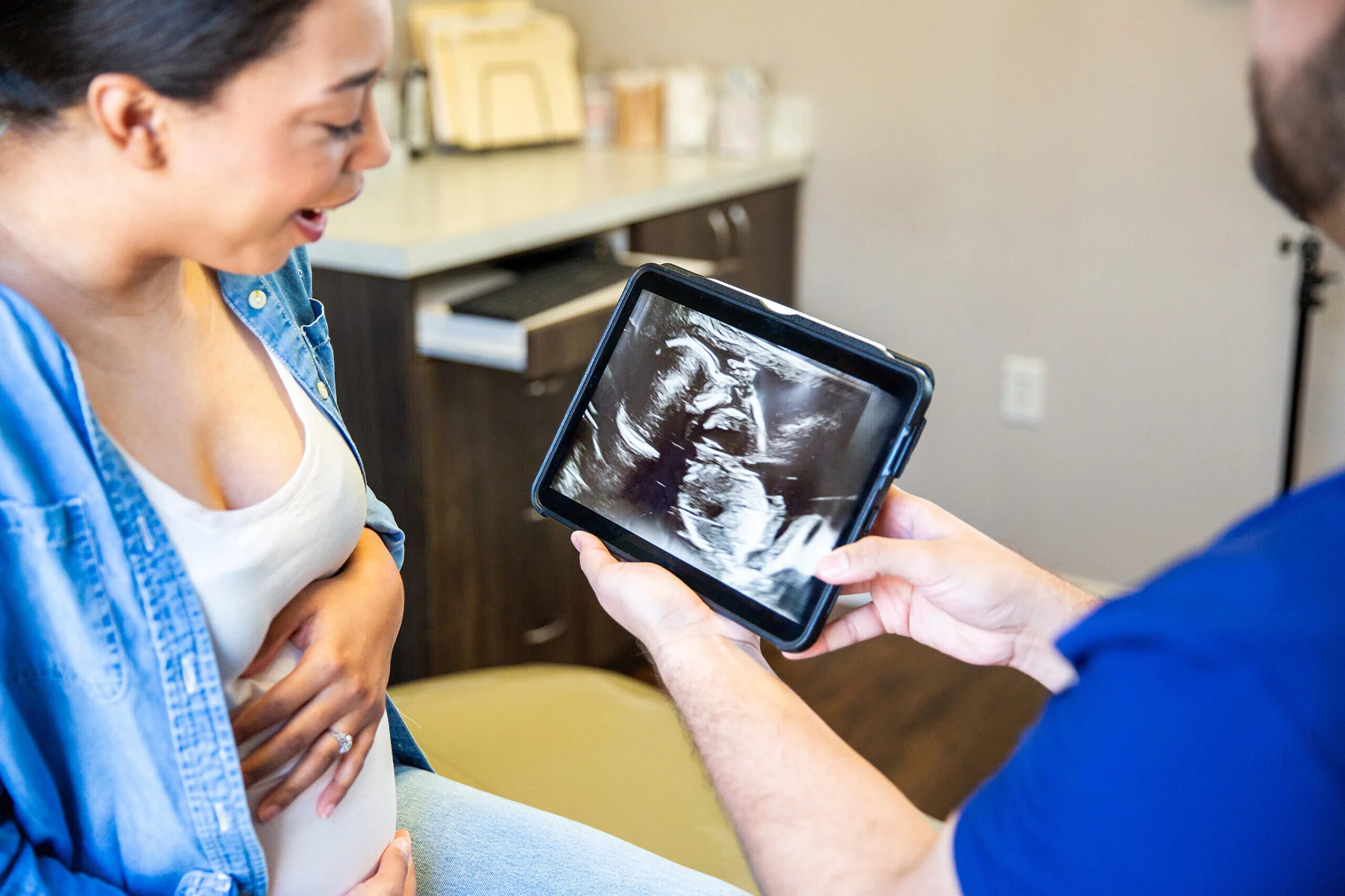
Many pregnant women are unsure if it’s safe to use marijuana or products containing cannabidiol, an active compound in marijuana, even as they increasingly turn to them to combat morning sickness, anxiety or insomnia, a recent University of Florida Health study shows. The American College of Obstetricians and Gynecologists advises against the use of marijuana and cannabidiol, or CBD, during pregnancy. Marijuana use has been associated in some studies with adverse fetal neurodevelopmental outcomes. Evidence of cannabidiol safety is sparse in human studies, but researchers remain concerned that it might nonetheless pose a danger. CBD is not intoxicating. The UF Health researchers said their study shows a need for the medical community to better educate women about the potential hazards to the fetus from using marijuana, also called cannabis. One worry is that some people believe the spreading legalization of marijuana or CBD around the nation equates to the government giving its stamp of approval that the products are safe, researchers said. Medical marijuana is legal in Florida, although its recreational use is not. “If a medication is legal, we assume that maybe it’s safe, although other things like tobacco and alcohol are also legal and we know that those can be harmful to pregnancies,” said Kay Roussos-Ross, M.D., the study’s senior author and a professor in the UF College of Medicine’s Department of Obstetrics and Gynecology. “We see a good deal of data out there that shows that there is increased risk of psychiatric and behavioral issues related to marijuana use in pregnancy, but we need more,” she added. “We need more so that we can be correct in our assessments and our educational efforts to women of reproductive age who are using marijuana.” It’s difficult to quantify the rise of marijuana and CBD use during pregnancy, with most estimates showing an increase predating COVID-19. A 2021 federal survey reported 7.2% of pregnant women used marijuana. The UF Health study noted that emerging evidence from obstetrics care shows more pregnant women are trying the products, perhaps because of increased legalization. The study, published in Medical Cannabis and Cannabinoids, surveyed 261 women and used focus groups to explore participants’ perceptions of the products. The women were either pregnant, breastfeeding or caring for a child 5 years old or younger, and reported use of marijuana or CBD products, such as vapes, smoking, tincture oils or ointments. “There seems to be a disconnect,” said Amie Goodin, Ph.D., an assistant professor in the UF College of Pharmacy’s Department of Pharmaceutical Outcomes and Policy and the study’s lead author. “About one in six pregnant women are telling us, ‘Yes, I have used marijuana or a CBD product while I’m pregnant.’ But half are saying, ‘I don’t know what the risks are.’” About 40% of the pregnant women surveyed said they were unsure how risky it was to use marijuana once or twice a week during pregnancy, compared with 34.5% of women who were not pregnant when surveyed for the study but who had children. Asked the same question about CBD, more than 52% of pregnant women were unsure of the risk, compared with 41.8% for mothers who weren’t pregnant when surveyed. About 36% of pregnant women reported using marijuana, compared with 65% of mothers not currently pregnant, perhaps reflecting at least some increased caution among those in the former group. CBD use was 19.9% for pregnant women and 38.2% for women who were not pregnant. “Some women did mention that the legalization of marijuana has made marijuana more socially acceptable,” said study co-author Deepthi Varma, Ph.D., an assistant professor in the College of Public Health and Health Professions’ Department of Epidemiology. The researchers said they were especially concerned that women were even less sure of the safety of CBD use because it is widely available and often seen as harmless. “You might notice that it’s even something that you can buy at a gas station or a grocery store,” Goodin said. “CBD in a purified form has actually got an FDA approval to treat certain types of pediatric epilepsy on its own … but pharmaceutical-grade CBD is not quite the same thing as you would expect to get if you were purchasing CBD oil at a smoke shop or a gas station.”


March 26, 2026
3 min
Ghost sharks grow forehead teeth to help them have sex
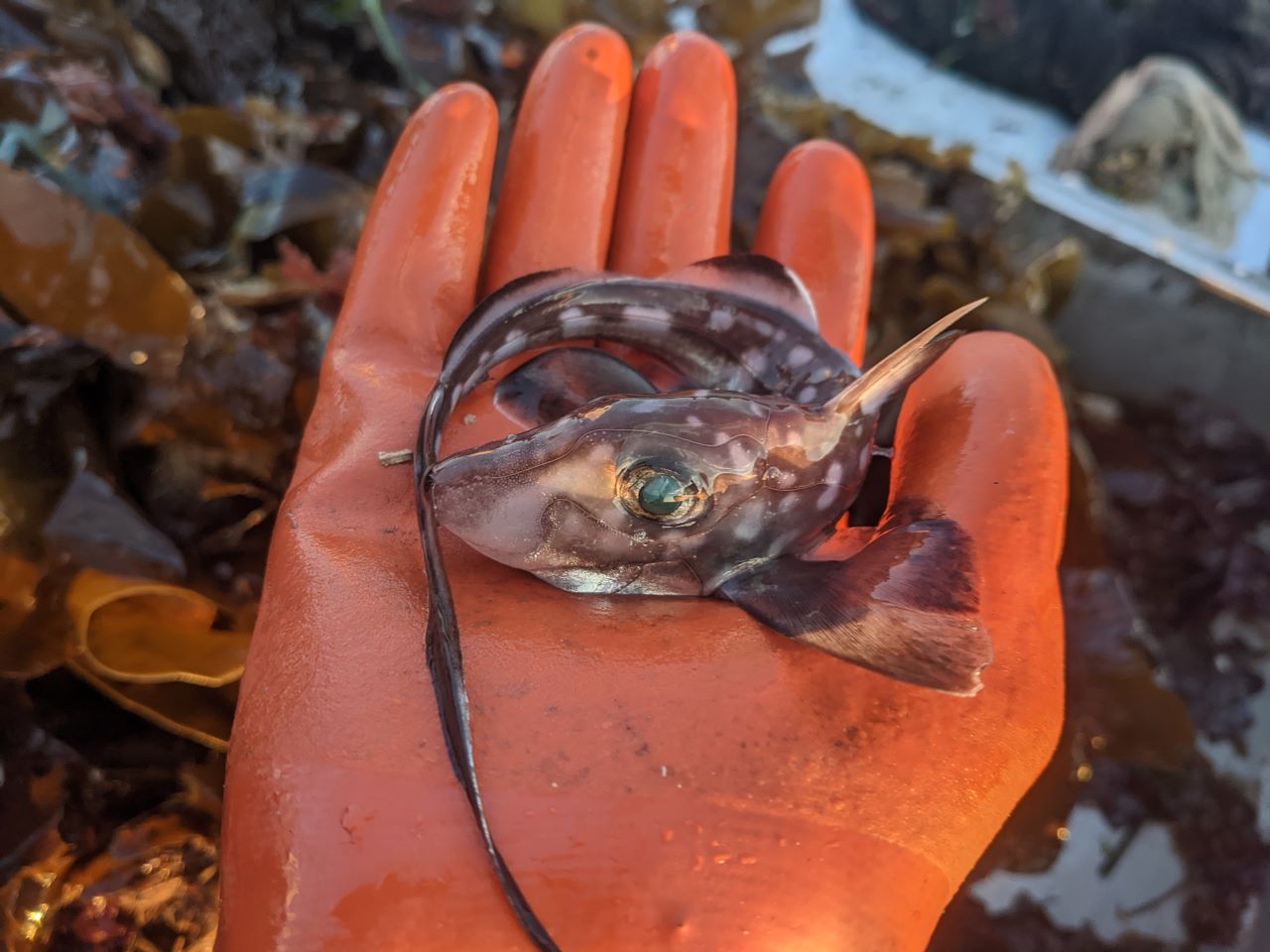
Male “ghost sharks” — eerie deep-sea fish known as chimaeras that are related to sharks and rays — have a strange rod jutting from their foreheads, studded with sharp, retractable teeth. New research reveals these are not merely lookalikes, but real rows of teeth that grow outside the mouth. What’s more, the toothy appendage is likely used for mating. Found only in males, the forehead rod — called a tenaculum — is the ghost sharks’ only source of distinct teeth, and it seems to be used to grasp females in much the same way sharks use their toothy mouths in mating. “If these strange chimaeras are sticking teeth on the front of their head, it makes you think about the dynamism of tooth development more generally,” said Gareth Fraser, Ph.D., a professor of biology at the University of Florida and senior author of the study. “If chimaeras can make a set of teeth outside the mouth, where else might we find teeth?” The team, including scientists from the University of Washington and the University of Chicago, studied both fossils and living specimens to solve the mystery. A 315-million-year-old fossil showed the tenaculum attached to the upper jaw, bearing teeth incredibly similar to those in the mouth. Modern chimaeras collected from Puget Sound revealed the same tooth-growing process on the head, seen in modern-day shark jaws. And genetic testing confirmed they expressed the same tooth-specific genes as oral teeth. “What we found is that the teeth on this strange appendage look very much like rows of shark teeth. The ability to make teeth transferred onto that appendage, likely from the mouth,” Fraser said. “Over time, the tenaculum shortened but retained the ability to make oral teeth on this forehead appendage.” Fraser collaborated with Washington’s Karly Cohen, Ph.D., and Michael Coates, Ph.D., from Chicago on the study, which was published this week in the Proceedings of the National Academy of Sciences. As experts in shark evolution and anatomy, the scientists were intrigued by these tooth-filled rods sprouting from the ghost shark foreheads. The central mystery: Is the tenaculum covered in true teeth related to oral teeth or more similar to the tooth-like scales plastering the skin of sharks and some ghost sharks? CT scans of the fossils and modern chimaeras gave the scientists unprecedented, detailed insights into the development of the tenaculum teeth, which looked remarkably similar to the teeth of today’s sharks. The nail in the coffin came from genetic evidence. The tenaculum teeth express genes found only in true teeth, never in shark skin denticles. "What I think is very neat about this project is that it provides a beautiful example of evolutionary tinkering or ‘bricolage,’” said Coates, a professor of biology at the University of Chicago. “We have a combination of experimental data with paleontological evidence to show how these fishes co-opted a preexisting program for manufacturing teeth to make a new device that is essential for reproduction." Cohen, a postdoctoral researcher at the University of Washington’s Friday Harbor Labs and first author of the paper, said scientists had never spotted teeth outside the mouth in this way before. “The tenaculum is a developmental relic, not a bizarre one-off, and the first clear example of a toothed structure outside the jaw,” she said. The bizarre path from a mouth full of teeth to forehead teeth used for mating demonstrates the impressive flexibility of evolution, the researchers say, always ready to repurpose structures for strange and unexpected new uses. “There are still plenty of surprises down in the ocean depths that we have yet to uncover,” Fraser said.

March 23, 2026
3 min